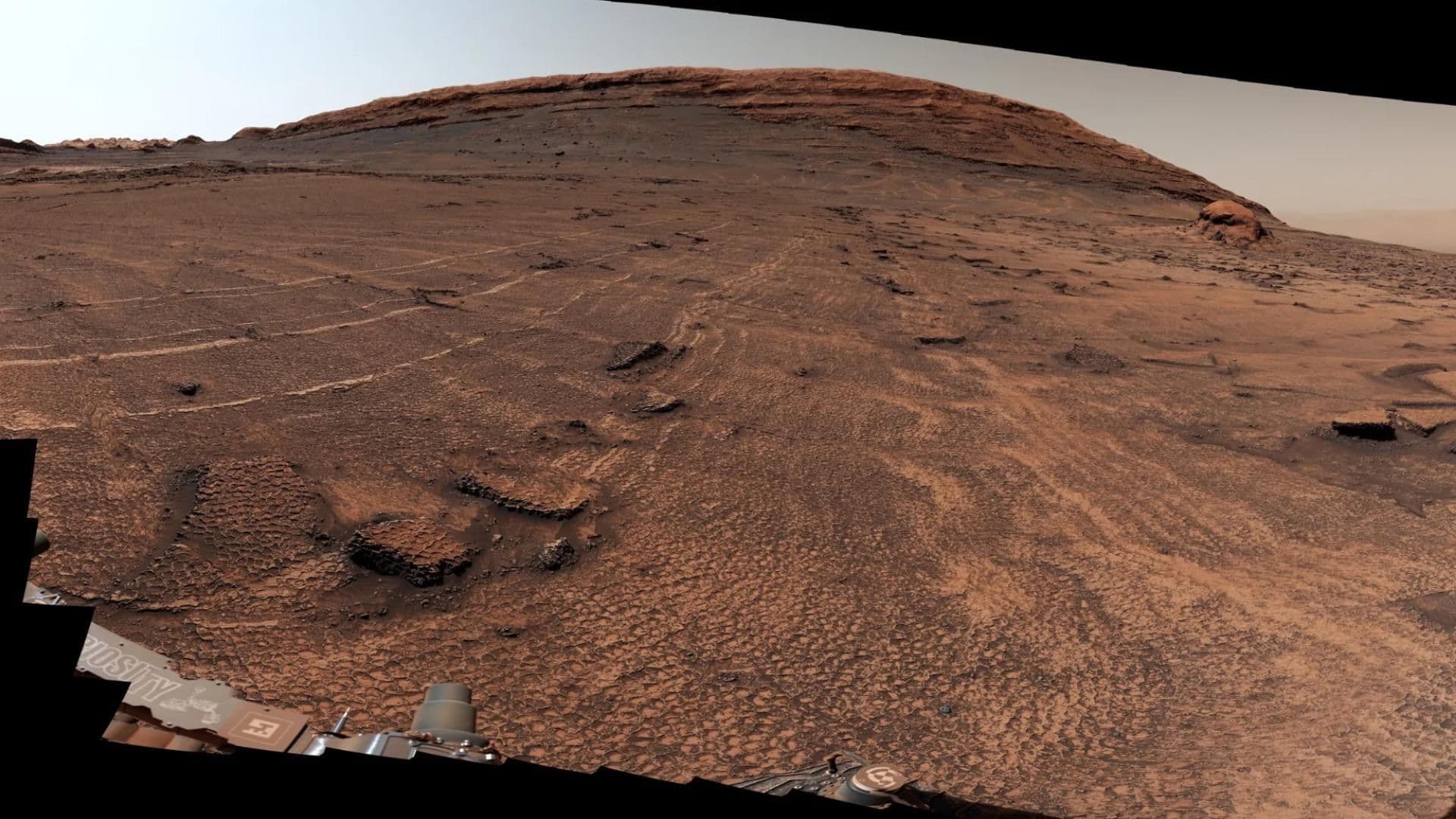
The Curiosity rover's latest discovery has sent shockwaves through the scientific community, revealing a vast expanse of honeycomb-shaped polygons on Mars. This enigmatic terrain feature, dubbed the 'sea of polygons,' has left experts scrambling to understand its origins and significance. As we delve into the mysteries of Valle Grande, we'll explore the implications of this find and what it might tell us about the Red Planet's complex history.
NASA's Curiosity rover has been documenting the Martian terrain since its arrival on the planet in 2012. However, the recent discovery of a massive field of polygonal fractures in Valle Grande has brought new attention to this phenomenon. These honeycomb-shaped patterns, each about 1.5 to 3 inches wide, are a stark departure from the typical Martian landscape. But what does it mean?
One of the primary challenges in understanding polygonal fractures is their sheer scale. While Curiosity has previously spotted small patches of these features, nothing on the scale of Valle Grande has been seen before. To put this into perspective, the rover's 360-degree panorama of the 'sea of polygons' covers an area roughly the size of a small Indian city. This raises important questions about the process that created such a massive and intricate pattern.
One theory is that these polygonal fractures are a remnant of ancient Martian water activity. Scientists believe that long ago, water flowed across the Martian surface, carving out valleys and creating sedimentary deposits. As the water froze and thaws, it expanded and contracted, causing the ground to fracture into the characteristic honeycomb pattern. This process is thought to have occurred multiple times, with the resulting fractures becoming more complex and extensive over time.
The connection to water is significant, as it suggests that Mars may have once been a more hospitable environment. The presence of polygonal fractures could indicate that the planet's surface was once wetter, with liquid water playing a crucial role in shaping the Martian terrain. This has important implications for our understanding of the planet's habitability and the potential for life beyond Earth.
While India's Mars Orbiter Mission (Mangalyaan) has been instrumental in studying the Martian atmosphere, the country's involvement in Mars exploration goes beyond orbiting the planet. The ISRO's upcoming Mars Sample Return Mission (MSRM) aims to collect samples from the Martian surface and return them to Earth for further analysis. This mission will provide critical insights into the planet's geology, including the origins of polygonal fractures like those seen in Valle Grande.
The MSRM also underscores India's growing presence in the international space community. As a relative newcomer to Mars exploration, India has demonstrated its capabilities through successful missions like Mangalyaan. The MSRM will further solidify India's position as a major player in the global space arena.
As we continue to explore the mysteries of Valle Grande, we're reminded of the vast unknowns that still surround Mars. The discovery of polygonal fractures has opened a new window into the planet's complex history, and scientists are eager to unravel the secrets hidden within. With the help of missions like the MSRM and ongoing research, we may soon uncover the truth behind these enigmatic features.
In the meantime, the 'sea of polygons' in Valle Grande remains a poignant reminder of the Red Planet's enduring allure. As we push the boundaries of our knowledge, we're drawn into a world of wonder and discovery, where the boundaries between science and imagination blur. The mysteries of Mars continue to captivate us, and it's only a matter of time before we uncover the next great secret hiding on the Red Planet.