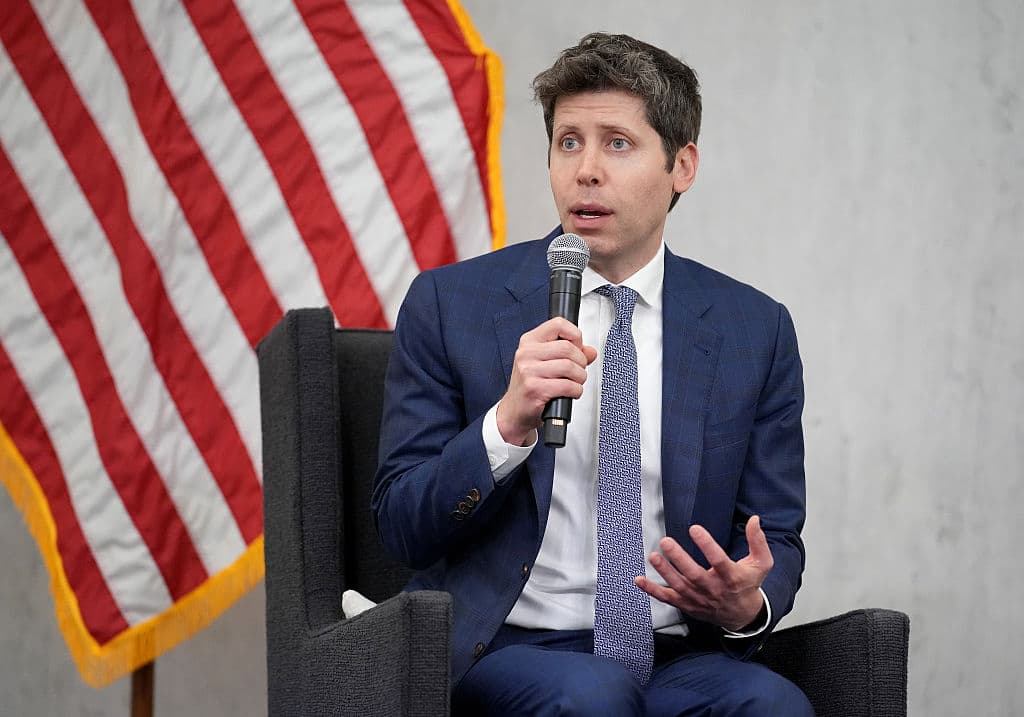
As the head of Y Combinator and one of the most influential voices in Silicon Valley, Sam Altman's words carry immense weight. Recently, Altman expressed a willingness to 'decelerate' the pace of innovation in artificial intelligence, citing a 'security incident' that left a lasting impact. This sudden change in tone is a significant development in the ongoing conversation around AI governance, and it's essential to understand the implications of Altman's words.
What happened is that Sam Altman, a long-time proponent of rapid technological progress, has begun to question the speed at which AI is advancing. This shift in perspective comes after a disturbing event that has left him and many others in the industry grappling with the consequences of unchecked innovation.
The AI governance debate has been simmering for years, with proponents of rapid progress arguing that it will bring about unprecedented economic growth and improvements in human life. On the other hand, critics have raised concerns about the potential risks associated with unbridled AI development, from job displacement to the exacerbation of social inequalities.
One of the key players in this debate is the US government, which has been slow to establish clear regulations for AI development. This lack of guidance has created a regulatory vacuum that has allowed companies like Google and Facebook to push the boundaries of AI without adequate oversight. The result has been a Wild West-like environment where innovators can operate with relative impunity, but also with little regard for the potential consequences.
The security incident that prompted Altman's change of heart is still unclear, but it's likely that it involved a high-profile data breach or a demonstration of the devastating potential of AI in the wrong hands. Whatever the specifics, it's clear that this event has shaken Altman to his core and has made him realize that the pace of AI development is unsustainable.
The implications of Altman's shift in rhetoric are far-reaching. If he and other influential voices in the industry begin to question the speed of AI progress, it could create a tipping point in the governance debate. Policymakers may finally be forced to take action and establish clear regulations for AI development, which would bring about a welcome sense of stability and predictability to the industry.
However, this shift also raises important questions about the future of innovation in AI. If the pace of progress is slowed, it could stifle the creativity and experimentation that have always driven the field forward. It's a delicate balance between progress and caution, and one that will require careful navigation.
As India's technology landscape continues to evolve, it's essential to keep a close eye on the AI governance debate. With companies like Infosys and Wipro pushing the boundaries of AI innovation, the country will need to establish its own regulatory framework to ensure that the benefits of AI are shared by all. The recent shift in Altman's rhetoric is a timely reminder that governance is not a trivial matter, and that the future of AI will be shaped by the decisions we make today.
What to watch next is the response of other industry leaders and policymakers. Will they follow Altman's lead and begin to question the pace of AI progress, or will they continue to push the boundaries of innovation without regard for the consequences? The answer will have far-reaching implications for the future of AI and the lives of people around the world.
In the end, Altman's shift in rhetoric is a sign of growing maturity in the AI industry. It's a recognition that the pace of progress is not without its costs, and that governance is an essential component of any successful innovation ecosystem. As we move forward, it's essential to remember that AI is a powerful tool that can bring about immense benefits, but also significant risks. By working together, we can create a future where AI is harnessed for the greater good, not just the benefit of a select few.
The future of AI will be shaped by our collective actions today. As we move forward, it's essential to prioritize governance and caution, while still allowing for the creativity and experimentation that have always driven the field forward. The stakes are high, but the potential rewards are worth it. By working together, we can create a future where AI is a force for good, not just a source of fear and uncertainty.