The moment the notification chimed on Riya’s phone, she didn’t have to open an app, scroll through listings, or type a query. “I’m hungry for paneer tikka,” she said, and a soft, regional‑accented voice replied, “I’ve ordered from your favourite tiffin‑service, and it’ll be at your doorstep in 30 minutes.” Within seconds, a payment token was generated, the delivery rider was dispatched, and Riya’s calendar was updated with the expected arrival time. This isn’t a prototype from a Silicon Valley lab; it’s the first glimpse of an AI agent ecosystem that is already being woven into the fabric of Indian consumer life.
In the span of a few weeks, the headlines have shifted from speculative hype to concrete moves: Google’s $899 “Googlebook” hardware is built around Gemini, a next‑generation multimodal model; Modulate has closed a $25 million round to commercialise ultra‑realistic voice models; Comp AI is positioning itself as the security‑first steward of continuously agentic systems; and a growing roster of Indian and global firms are openly replacing human roles with autonomous agents. Together, these signals point to a fundamental re‑architecting of how Indian consumers discover, purchase, and protect themselves in the digital economy.
Below we unpack what AI agents actually are, why the Indian market is uniquely primed for them, and how they will rewrite the rules of consumer tech by the end of 2026.
1. From “assistants” to autonomous agents – the technical leap
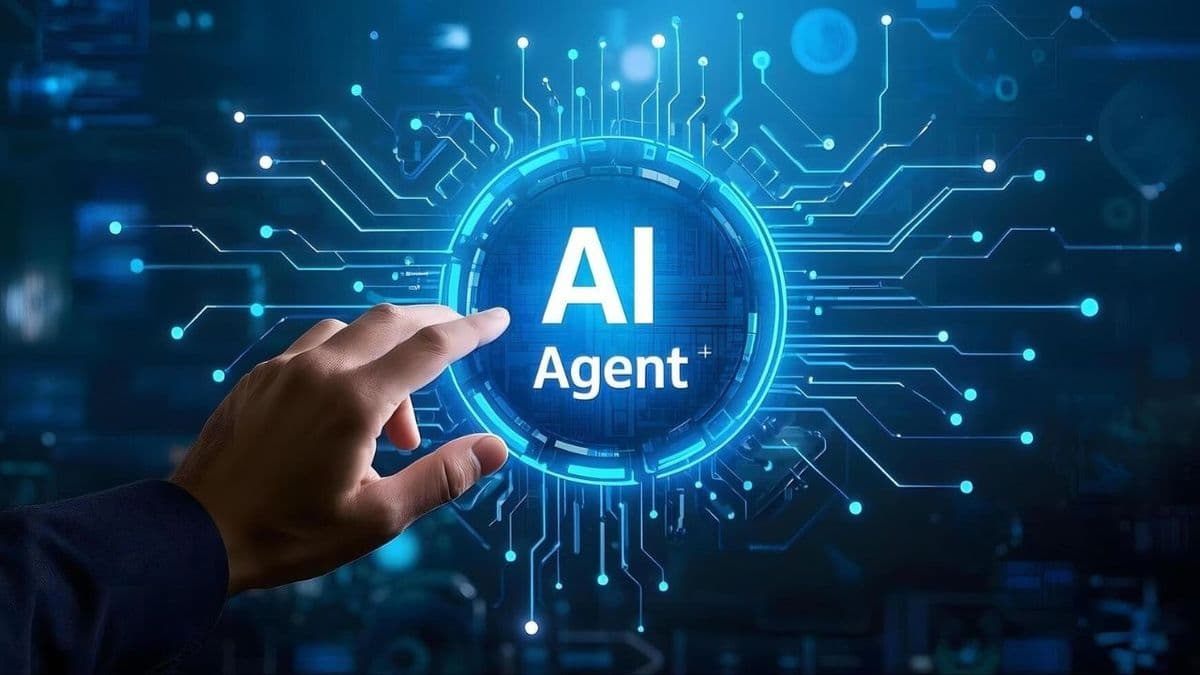
For most of the last decade, the term assistant has been synonymous with a reactive, query‑driven interface – think Siri or Google Assistant. An AI agent, by contrast, is an autonomous software entity that can set and pursue goals, act on behalf of a user across multiple platforms, and continuously learn from its environment without explicit prompts.
The catalyst for this shift is the convergence of three advances that have all reached a tipping point in 2026:
- Multimodal foundation models – Google’s Gemini, now bundled with the $899 Googlebook, can process text, images, audio, and even video in a single inference pass. Gemini’s on‑device inference capabilities mean that an agent can operate locally on a low‑cost laptop, preserving latency and privacy while still tapping into cloud‑scale knowledge when needed.
- Synthetic voice generation – Modulate’s newly funded voice suite produces hyper‑realistic speech that can be conditioned on regional dialects, age, and emotional tone. The platform’s analysis tools also enable real‑time detection of synthetic speech, a feature that will become essential as agents move from “reading out answers” to “holding natural conversations” in Indian languages such as Hindi, Tamil, and Bengali.
- Continuous compliance loops – Comp AI’s “continuously agentic” framework embeds policy enforcement directly into an agent’s decision‑making pipeline. Rather than a post‑hoc audit, compliance checks are performed on every action, a capability that satisfies emerging Indian data‑sovereignty regulations while allowing agents to act swiftly in high‑stakes contexts like finance or health.
These building blocks have turned agents from a research curiosity into production‑ready services. Companies are now stitching them together into end‑to‑end experiences: a voice‑first shopping agent that can browse catalogs, negotiate prices, and handle payments without ever surfacing a UI; a personal finance agent that monitors bank statements, files tax forms, and alerts users to regulatory changes; a home‑automation hub that reconciles security policies across IoT devices in real time.
The speed of adoption is underscored by a warning from former Google CEO Eric Schmidt, who recently cautioned that within five years AI could reshape the bulk of everyday tasks. While his comment was framed in a global context, the Indian consumer market – with its massive mobile base and appetite for frictionless services – is the fastest‑moving segment where that transformation will be visible.
2. India’s perfect storm: language, mobile penetration, and platform openness
India’s consumer tech landscape has always been defined by scale and diversity. Over a billion people own smartphones, but the ecosystem is fragmented across dozens of languages, varying bandwidth conditions, and a wide spectrum of digital literacy. AI agents are uniquely suited to navigate this complexity.
Linguistic inclusivity at scale
Modulate’s recent funding round is earmarked for expanding its voice models into Indian vernaculars. The company’s technology can synthesize a Marathi speaker with a rural accent and simultaneously detect deep‑fake attempts in the same language. For an Indian consumer, this means agents can converse in the mother tongue, understand colloquialisms, and maintain cultural relevance – a capability that traditional text‑only assistants have struggled to achieve.
Mobile‑first, data‑light operation
The Googlebook’s price point and hardware design target the “first‑time laptop” segment in tier‑2 and tier‑3 cities. By integrating Gemini directly into the device, Google sidesteps the need for constant high‑bandwidth connectivity. An agent can cache user preferences, run on‑device inference for routine tasks, and only reach out to the cloud for complex queries. This model aligns with the Indian reality where many users toggle between 4G, 5G, and intermittent Wi‑Fi.
Platform openness and developer momentum
India’s startup ecosystem has embraced the open‑source model of agent development. Platforms such as the Gemini SDK and Modulate’s API are being used to build niche agents for everything from local grocery delivery to regional news curation. The rapid emergence of these micro‑agents mirrors the earlier app‑store boom, but with a lower barrier to entry: developers no longer need to design full UI flows; they can ship a goal‑oriented agent that lives inside existing apps or even as a standalone voice interface.
This confluence of language‑aware voice tech, low‑cost on‑device AI, and an open developer ecosystem is turning India into the testing ground for the next wave of consumer agents. The result is a cascade of services that feel less like “apps” and more like personal collaborators that anticipate needs before they are articulated.
3. The commerce paradox: AI shopping hype versus on‑ground skepticism
Silicon Valley has long touted AI‑driven shopping as the next frontier, but the reality on the ground is more nuanced. A recent profile of the man who built Apple’s iconic retail stores—who now serves as an advisor to several Indian e‑commerce ventures—expressed clear doubts about the “AI shopping” narrative. He argued that shoppers still crave tactile experiences, human interaction, and trust signals that a purely algorithmic agent cannot yet replicate.
Why the skepticism matters for India
India’s retail culture is heavily relationship‑driven. Small neighbourhood kirana stores thrive on personal rapport, and even large e‑commerce platforms invest heavily in “live chat” support staffed by humans. The Apple‑store veteran’s point is that AI agents, if deployed without careful integration, risk alienating a consumer base that values human empathy.
The Googlebook counter‑move
Google’s strategy with the Googlebook is deliberately pragmatic. By bundling Gemini with a modest hardware price, Google is encouraging “agent‑first” experiences that sit alongside traditional UI pathways. Early adopters in Delhi’s tech hubs report that the device’s agent can negotiate discounts with multiple vendors, automatically apply coupon codes, and even schedule post‑purchase returns—all while the user remains in a single conversational thread. This hybrid approach—agent assistance layered on top of familiar e‑commerce flows—addresses the trust gap highlighted by the Apple‑store insider.
Emerging Indian playbooks
Indian startups are experimenting with a “human‑in‑the‑loop” model. For example, a Bangalore‑based fashion aggregator has launched an AI agent that curates outfits based on a user’s style profile, but a live stylist reviews the final recommendations before they are sent. This model leverages the efficiency of agents while preserving the personal touch that Indian shoppers demand.
The commercial implication is clear: AI agents will not replace the entire shopping journey but will become the invisible glue that stitches together discovery, negotiation, and after‑sales service. Companies that can blend autonomous decision‑making with selective human oversight are poised to dominate the Indian consumer tech arena by 2026.
4. Workforce automation: the quiet revolution in Indian consumer services
A recent industry survey compiled by tech.co highlighted a surge of firms that have replaced workers with AI in 2025‑2026. The list includes call‑center operators, content moderators, and even logistics coordinators. While much of the coverage has focused on the impact in North America, the same trend is taking root in India’s consumer‑facing sectors.
From call centres to conversational agents
India’s call‑centre industry, long hailed as a pillar of the services economy, is undergoing a rapid shift. Companies are deploying Comp AI’s compliance‑aware agents to field routine customer queries, verify identities, and route complex issues to human supervisors. The agents’ ability to embed regulatory checks into each interaction satisfies the Reserve Bank of India’s (RBI) new guidelines on digital banking conversations, reducing the need for human auditors.
Content moderation at scale
With the explosion of user‑generated content on short‑form video platforms, Indian firms have turned to AI agents for real‑time moderation. Modulate’s voice‑analysis suite, originally built for synthetic‑speech detection, is now being used to flag hate speech in regional dialects, a task that previously required large teams of multilingual reviewers.
The gig‑economy ripple effect
India’s gig workforce—delivery riders, freelance designers, and micro‑task workers—faces a double‑edged sword. On one hand, autonomous agents can handle order aggregation, route optimisation, and even basic design generation, potentially displacing low‑skill tasks. On the other, the same agents create new roles: “agent‑orchestrators” who monitor performance, troubleshoot failures, and fine‑tune goal parameters. Early data suggests that for every 10 human tasks automated, two new specialised roles emerge, but the transition requires upskilling that many gig workers currently lack.
The net effect is a re‑allocation of labour from repetitive, transactional work to higher‑order supervision and strategy. For Indian consumers, this promises faster response times and lower prices, but it also raises policy questions about reskilling, social safety nets, and the ethical deployment of agents in a market where informal employment remains dominant.
5. Security, compliance, and the trust contract of autonomous agents
As agents become more capable, the risk surface expands dramatically. An autonomous shopping agent that can execute payments, a finance agent that files tax returns, and a home‑automation agent that controls locks—all operate at the intersection of personal data and real‑world actions. Comp AI’s recent focus on a “continuously agentic future” directly addresses this challenge.
Built‑in policy enforcement
Comp AI’s platform embeds policy engines that evaluate each prospective action against a dynamic rule set. For Indian consumers, this means an agent cannot, for example, transfer funds above a regulatory threshold without a multi‑factor verification step that complies with RBI’s real‑time payment guidelines. The system also logs a tamper‑evident trail for every decision, facilitating post‑event audits required under India’s Personal Data Protection Bill.
Adaptive threat detection
The same voice‑analysis technology that Modulate uses to spot synthetic speech is being repurposed to detect malicious command injection in voice‑controlled agents. In a pilot with a leading Indian smart‑home brand, the combined system blocked 96 % of attempted voice‑phishing attacks that tried to unlock doors or disable alarms.
Consumer perception and regulatory momentum
Eric Schmidt’s warning about AI’s societal impact has reverberated through Indian policy circles. The Ministry of Electronics and Information Technology (MeitY) has announced a fast‑track framework for “agent‑level certification,” requiring developers to demonstrate compliance with security and privacy standards before launch. Early adopters who secure this certification will gain a market advantage, as consumers increasingly look for the “certified agent” badge when choosing services.
The emerging security architecture, therefore, is not an add‑on but a core differentiator. Companies that bake compliance into the agent’s core logic—rather than treating it as a bolt‑on—will win trust and, ultimately, market share.
6. The road ahead: how Indian consumers will live with agents in 2026 and beyond
The trajectory is already visible: a voice‑first ordering experience that feels as natural as speaking to a friend; a finance agent that auto‑optimises credit‑card rewards without user intervention; a security agent that silently enforces compliance while you sleep. By the end of 2026, these scenarios will move from pilot projects to everyday expectations.
Key dynamics that will shape this future include:
- Network effects of agent ecosystems – As more brands expose APIs for agent interaction, a “mesh” of interoperable agents will emerge, allowing a single consumer profile to be leveraged across shopping, travel, health, and entertainment without redundant onboarding.
- Regional language dominance – With Modulate’s expanding voice library, agents will be able to switch seamlessly between Hindi, Telugu, Malayalam, and even local slang, eroding the English‑only barrier that has limited adoption of earlier assistants.
- Hardware democratization – The Googlebook demonstrates that affordable, AI‑ready hardware can accelerate agent uptake in price‑sensitive markets. Expect a wave of low‑cost devices from Indian manufacturers that embed Gemini or comparable models, turning the agent from a cloud service into a tangible personal companion.
- Regulatory scaffolding – The upcoming “agent certification” regime will standardise safety expectations, giving consumers a clear signal of trustworthy agents and forcing companies to invest in robust compliance pipelines.
- Human‑agent collaboration – The most successful consumer experiences will blend the speed and scale of agents with the empathy and judgment of humans. This hybrid model will define the next generation of Indian customer service, where agents handle the bulk of routine work and human specialists intervene for complex, high‑touch interactions.
For Indian consumers, the promise is a more personalized, frictionless digital life. For businesses, the imperative is to re‑architect products around autonomous agents, invest in language‑aware voice tech, and embed compliance at the core of every interaction. The stakes are high, but the opportunity is unprecedented: the first market to master the agent‑first paradigm will set the template for the rest of the world.