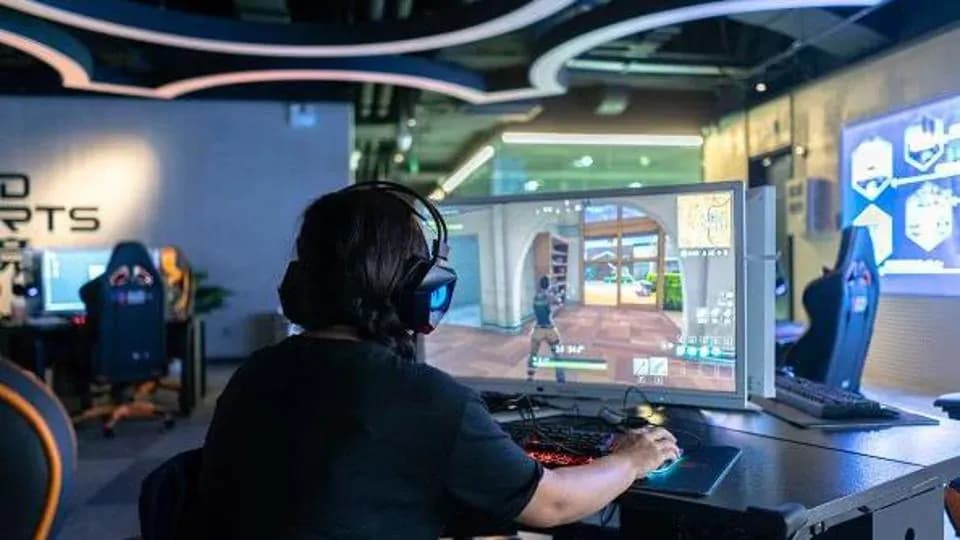
The roar of a first‑person shooter no longer needs a data‑center in the cloud. In the cramped apartments of Bangalore, the bustling cafés of Delhi, and the tier‑II hubs of Pune, gamers are pulling up browser tabs and launching immersive experiences that run directly on their phones, laptops, and even low‑cost AR glasses. What once required a pricey subscription to a cloud‑gaming platform is now happening at the edge of the network, powered by two open standards that have finally crossed the finish line: WebGPU and WebXR.
The shift is not a fleeting fad. It is the culmination of three converging forces that have been building for years—hardware acceleration on consumer devices, a maturing browser ecosystem, and a strategic push from Indian telcos and game studios to sidestep the latency, cost, and data‑privacy concerns that have plagued cloud streaming. The result is an “edge gaming” model that delivers near‑native performance without the back‑haul to distant servers. In a country where average broadband speeds still lag behind global averages, and where data caps remain a pain point for millions, the economics of running a game locally are suddenly attractive to both players and developers.
In the pages that follow, we unpack how WebGPU and WebXR are reshaping the Indian gaming landscape, why the technology is arriving now, who stands to win, and what the next wave of innovation might look like. This is not a simple replacement of cloud streaming; it is a structural re‑alignment of the entire value chain—from device manufacturers to indie studios, from ad‑tech platforms to the regulators who control spectrum.
The Technical Tipping Point: From Experimental APIs to Production‑Ready Standards
For most of the past decade, browsers were seen as a “lowest‑common‑denominator” platform—great for casual games but hopeless for graphically intensive titles. The introduction of WebGL gave developers a way to tap the GPU, yet performance was limited by an abstraction layer that could not expose the full capabilities of modern graphics hardware. WebGPU, the successor to WebGL, finally bridges that gap. It offers a low‑overhead, explicit graphics API that maps closely to Vulkan, Metal, and Direct3D 12, letting browsers issue commands to the GPU with minimal translation.
The breakthrough came when the major browser vendors—Google (Chrome), Microsoft (Edge), Apple (Safari), and Mozilla (Firefox)—synchronised their release schedules and committed to a unified specification. This coordination eliminated the fragmentation that previously forced developers to write separate code paths for each engine. In India, where the device mix is especially diverse—from high‑end flagships to budget Android phones—the ability to write once and run everywhere is a decisive advantage.
Simultaneously, WebXR has matured from a niche VR/AR experiment into a robust, cross‑platform runtime. The API now supports not only head‑mounted displays but also handheld AR experiences that overlay graphics onto the camera feed of a smartphone. Crucially, WebXR can leverage the same WebGPU pipeline, meaning that a single codebase can power both 3D rendering and spatial interaction without toggling between disparate APIs.
The convergence of these two standards has unlocked a development paradigm that mirrors native game engines while retaining the distribution simplicity of the web. Studios can ship updates instantly, bypassing the lengthy approval processes of app stores. Players can start a session with a single click, without downloading megabytes of assets or worrying about compatibility. The result is a frictionless entry point that is especially compelling for the Indian market, where data‑heavy downloads often collide with restrictive data‑plan limits.
Infrastructure Realignment: Edge Nodes, 5G, and the Decline of Centralised Cloud Gaming
Cloud gaming’s promise—run the game on a remote server, stream the video to a thin client—relied on ultra‑low latency and massive bandwidth. In practice, the model has struggled in India’s tier‑II and tier‑III cities, where fiber penetration is uneven and mobile networks experience high jitter. The emergence of 5G, however, has begun to change the calculus. Telecom operators such as Reliance Jio and Bharti Airtel have rolled out dense small‑cell deployments that place compute resources within a few kilometres of end users.
These edge nodes are not the monolithic GPU farms of the early cloud‑gaming era. Instead, they host lightweight containers that run WebGPU‑enabled browsers, acting as a “last‑mile accelerator” for content delivery networks (CDNs). When a player launches a WebGPU‑based title, the browser first pulls compressed assets from a regional CDN, then compiles shader code on‑the‑fly using the device’s own GPU. The edge node’s role is to provide a fast, low‑latency handshake and to cache frequently accessed resources, dramatically reducing round‑trip times compared to a transcontinental data centre.
The economics are stark. A typical cloud‑gaming session can consume upwards of 10 GB of downstream traffic per hour, a cost that is prohibitive for most Indian households. Edge‑based WebGPU games, by contrast, stream only the initial asset bundle—often under 200 MB—and then rely on the local GPU for frame generation. This shift slashes data usage by more than 90 percent, turning high‑quality gaming into a viable pastime even on modest prepaid plans.
Furthermore, the regulatory environment is nudging operators toward edge solutions. Recent spectrum auctions have earmarked portions of the 3.5 GHz band for “ultra‑low‑latency services,” a category that includes real‑time gaming. By positioning compute at the edge, telcos can monetize this spectrum without the massive capital outlay required for full‑scale cloud farms. The result is a virtuous loop: operators invest in edge compute to meet regulatory goals, developers adopt WebGPU to exploit the low‑latency pipeline, and gamers enjoy smoother experiences at a fraction of the data cost.
Indian Studios Seize the Moment: From Porting to Native‑Web Development
The technical and infrastructural enablers have catalysed a strategic pivot among Indian game developers. Historically, many studios focused on porting mobile titles to the browser or building simple 2D HTML5 games that could run on any device. The arrival of production‑ready WebGPU has prompted a wave of “native‑web” projects—games built from the ground up to run in the browser while delivering console‑grade graphics.
Nazara Technologies, a veteran of the Indian gaming ecosystem, recently announced a suite of WebGPU‑powered titles that blend high‑fidelity visuals with localized content. Their flagship sports simulation, built on the Unity engine’s WebGPU export pipeline, showcases real‑time lighting and particle effects that were previously impossible in a browser. By avoiding the need to negotiate revenue shares with cloud‑gaming platforms, Nazara retains a larger slice of in‑game purchases, a critical factor given the price‑sensitivity of Indian gamers.
Indie studios are also finding a foothold. A collective of developers in Hyderabad, operating under the moniker “PixelPulse,” released an atmospheric horror adventure that leverages WebXR to create location‑based puzzles. Players use their phone’s camera to scan their surroundings, and the game overlays interactive holograms that respond to real‑world lighting. Because the heavy lifting is done on the device’s GPU, the experience runs smoothly even on mid‑range smartphones that dominate the Indian market.
The shift is not limited to graphics. WebGPU’s explicit memory management and compute shaders enable sophisticated physics simulations and AI inference directly in the browser. Studios are experimenting with on‑device procedural generation, allowing endless worlds to be assembled without streaming massive terrain data. This capability opens new monetisation models—such as “pay‑once‑play‑forever” licences—that were previously untenable in a streaming‑centric paradigm.
Business Models Re‑Engineered: Advertising, Subscriptions, and the Rise of “Play‑to‑Earn” on the Web
With the cost barrier of cloud streaming eroding, developers are re‑examining how to capture revenue. Advertising, long a staple of free‑to‑play mobile games, now has a richer canvas. WebGPU’s ability to render high‑resolution billboards and dynamic product placements in real time means that brands can sponsor in‑game events with a level of immersion that static banner ads cannot match.
At the same time, the subscription model—once championed by services like Xbox Game Pass—finds a new incarnation in “browser bundles.” A few Indian telcos have begun offering tiered access to a curated library of WebGPU games as part of their data plans. Because the games run locally, the incremental data cost is negligible, making the bundles attractive to consumers who already pay for broadband or 5G connectivity.
The “play‑to‑earn” narrative, popularised by blockchain‑based titles, is also taking a web‑centric turn. By anchoring token economies to on‑chain smart contracts that interact with WebXR environments, developers can reward players for completing spatial challenges without the overhead of maintaining a dedicated backend. While regulatory scrutiny around crypto persists, the underlying principle—rewarding engagement with real‑world value—fits neatly into the edge‑gaming model, where transactions can be processed locally and settled on a public ledger with minimal latency.
These emerging business structures are reshaping the value chain. Publishers that once acted as gatekeepers of app‑store distribution are now competing with telcos for the “first‑touch” slot in the user journey. Advertising agencies are hiring graphics programmers capable of integrating brand assets into WebGPU pipelines. And investors are gravitating toward startups that can demonstrate a seamless blend of high‑performance rendering, low data consumption, and flexible monetisation.
The Competitive Landscape: Global Players, Indian Start‑Ups, and the Race for Standards
The global gaming ecosystem is taking note. Companies such as NVIDIA and AMD have begun contributing code to the open‑source WebGPU implementation, ensuring that their latest shader models are available to browsers worldwide. Meanwhile, Microsoft’s mixed‑reality division is actively collaborating with Indian AR‑focused start‑ups to integrate WebXR experiences into its Mesh platform, positioning the West as a partner rather than a competitor.
Within India, the battle lines are drawn along three axes: platform control, content library, and distribution reach. Jio Platforms, leveraging its massive subscriber base, is rolling out a developer portal that offers free WebGPU tooling, cloud‑edge compute credits, and analytics dashboards tailored to Indian usage patterns. This initiative lowers the barrier to entry for small studios and creates a de‑facto ecosystem that could rival the dominance of established app‑store giants.
Conversely, independent studios such as “Moj”—renowned for its AR social filters—are doubling down on WebXR to create “social gaming” experiences that blend user‑generated content with branded narratives. By keeping the entire stack in the browser, Moj avoids the fragmentation of native SDKs across Android, iOS, and emerging AR glasses, allowing rapid iteration and cross‑device compatibility.
The standards bodies themselves are under pressure to keep pace. The W3C’s WebGPU Working Group has introduced a set of performance benchmarks that explicitly target low‑end devices, a move prompted by Indian market data showing that a majority of gamers use sub‑flagship hardware. These benchmarks will likely become the de‑facto certification criteria for any game that wishes to claim “edge‑optimized” performance, further solidifying the web as the primary distribution channel for high‑quality interactive content in India.
Forward‑Looking Scenarios: What the Next Five Years May Hold
If the current trajectory holds, edge gaming in India could eclipse traditional cloud streaming within the next half‑decade. The combination of ever‑more capable mobile GPUs, expanding 5G coverage, and a thriving ecosystem of WebGPU‑ready browsers creates a virtuous cycle: better performance fuels higher adoption, which in turn justifies further investment in edge infrastructure.
One plausible scenario sees telcos bundling WebGPU game libraries with their premium data plans, effectively turning connectivity into a platform. In that world, a teenager in a remote village could launch a multiplayer battle royale that runs entirely on his phone’s GPU, while his opponent in Mumbai streams the same experience from a nearby edge node, both enjoying sub‑20 ms latency.
A second, more speculative pathway involves the convergence of WebXR with the burgeoning “digital twin” market. As Indian enterprises adopt immersive simulations for training and design, the same WebGPU/WebXR stack could serve both enterprise and consumer audiences, blurring the line between work and play.
Regardless of which narrative prevails, the key takeaway is that the web—once relegated to static pages and simple games—has become a high‑performance, low‑latency canvas for the next generation of interactive entertainment. For Indian gamers, developers, and investors, the edge is no longer a distant concept; it is the present reality reshaping how games are built, delivered, and monetised.