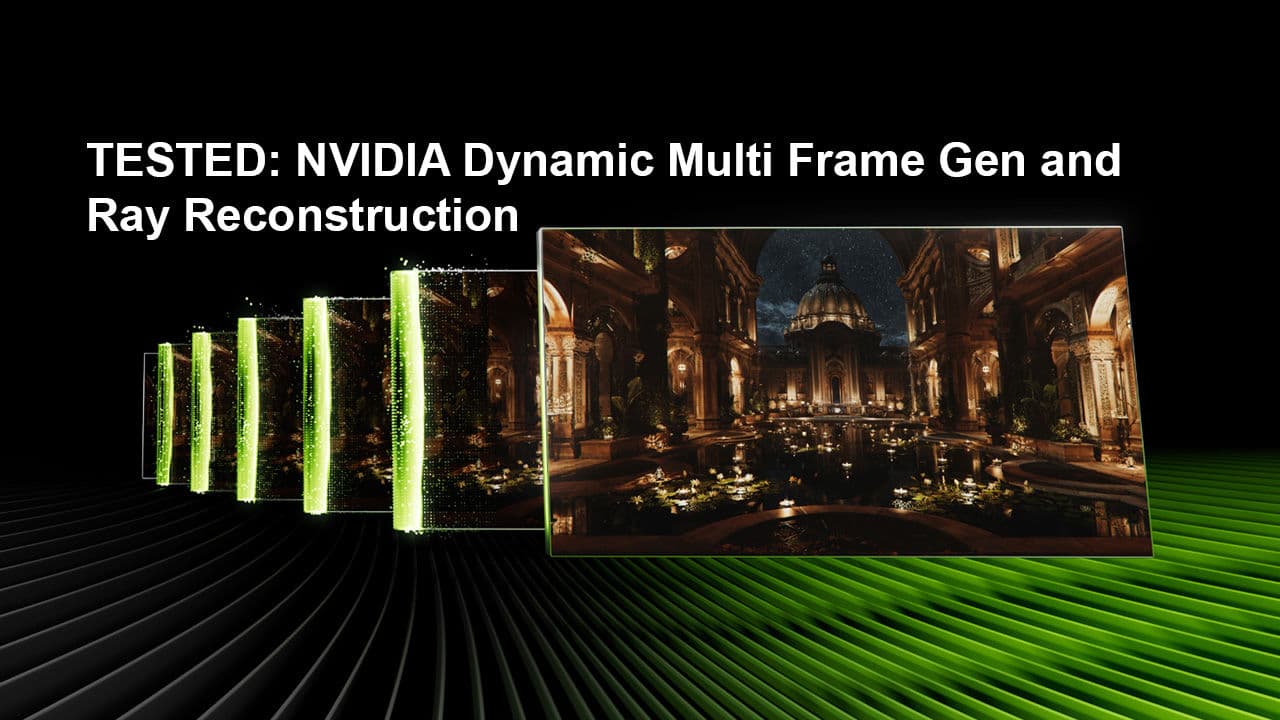
NVIDIA’s latest leap, DLSS 4.5, turns the familiar up‑scaling trick into a full‑fledged, AI‑guided rendering engine that decides on‑the‑fly how many frames to synthesize, when to fire ray‑tracing kernels, and how to stitch the final image together. The result is a technology that blurs the line between the game engine’s internal logic and the pixels that finally appear on a monitor, promising smoother gameplay, richer lighting and a new way for developers to think about performance.
From Upscaling to Rendering Intelligence
The journey began with DLSS 1.0, a proof‑of‑concept that let a GPU render a scene at a lower resolution and then upscale it using a pre‑trained neural network. That first version leaned heavily on hand‑crafted heuristics; the model was tuned for a handful of titles and could look out of place elsewhere.
DLSS 2.0 broadened the appeal by swapping the brittle heuristics for a more robust convolutional network, adding support for a wider library of games and delivering noticeably sharper images without a heavy performance hit. The real game‑changer arrived with DLSS 3.0, which introduced Dynamic Multi‑Frame Generation (DMFG) – the ability to create entirely new intermediate frames, effectively raising the perceived frame rate without extra rasterisation work.
DLSS 4.5 builds on that foundation but pushes the AI out of the role of a clever post‑process filter into the role of a director. Instead of merely taking a rendered frame and polishing it, the system now sits between the engine and the display, orchestrating the entire visual pipeline. As NVIDIA puts it, “the AI can decide how many frames to generate, when to invoke ray‑tracing, and how to blend or reconstruct rays on the fly.”
DLSS version | Core technique | Frame generation | Ray‑tracing support | Typical use case |
|---|---|---|---|---|
1.0 | Pre‑trained up‑scale net, hand‑crafted heuristics | No | None | Early adopters, limited titles |
2.0 | Robust convolutional net, temporal feedback | No | Optional (via separate RTX pipeline) | Mainstream games, higher quality up‑scale |
3.0 | Adds DMFG, uses optical flow for intermediate frames | Yes (AI‑generated) | Still separate | High‑frame‑rate gaming, competitive titles |
4.5 | Full AI‑driven rendering pipeline, integrated DMFG & ray reconstruction | Adaptive (scene‑aware) | Integrated via Ray Reconstruction | End‑to‑end performance‑quality balance |
Dynamic Multi‑Frame Generation Gets Smarter
DMFG was not invented by DLSS 4.5, but the new release couples it tightly to the engine’s own timing signals. A lightweight neural scheduler watches motion vectors, depth buffers and lighting changes, then decides whether to crank out extra frames or hold back when the scene is chaotic.
For a static lobby or a cut‑scene with slow camera pans, the scheduler can double or even triple the frame density, delivering buttery‑smooth motion without taxing the rasteriser. In a fast‑paced shooter where geometry churns rapidly, it scales back, conserving GPU cycles for shading and physics.
Developers gain a single API call that hands over “frame density” control to NVIDIA’s AI, freeing them from the tedious process of hard‑coding frame‑rate caps for each platform. The net effect is a more consistent experience across PC, console and cloud‑gaming back‑ends.
Ray Reconstruction: Doing More with Fewer Rays
Real‑time ray‑tracing has always been a luxury, demanding thousands of rays per pixel to produce believable reflections, shadows and global illumination. DLSS 4.5 introduces a Ray Reconstruction module that learns the relationship between traced rays and the final lighting outcome. By predicting the contribution of missing rays, the network can operate with as little as 25 % of the original ray budget while still delivering comparable visual fidelity.
The practical upshot is twofold. First, GPU load drops dramatically, opening headroom for higher resolutions, denser geometry or more complex particle systems. Second, developers can afford to enable ray‑tracing effects on lower‑tier hardware, widening the audience for titles that previously required premium GPUs.
Ripple Effects Across the Gaming Ecosystem
Hardware Manufacturers
The AI‑centric pipeline transforms the GPU from a pure shader executor into a decision‑making hub. OEMs are now incentivised to embed dedicated inference cores—similar to the Tensor cores already present in RTX cards—directly onto the silicon. This could lower power draw for AI workloads and improve latency, a crucial factor for competitive gaming where every millisecond counts.
Game Developers
By exposing the DLSS 4.5 API, studios can offload much of the performance‑tuning burden to NVIDIA’s neural scheduler. Indie teams, which often lack the resources to craft platform‑specific optimisation passes, stand to benefit the most. Larger studios can also streamline their pipelines, focusing on gameplay and narrative rather than low‑level frame‑rate gymnastics.
Content Creators
Film and animation pipelines that already rely on GPU rendering can now capture higher‑frame‑rate footage without additional passes. The ability to generate multiple frames from a single render pass simplifies motion‑blur creation and enables more realistic lighting in post‑production, all while keeping render times in check.
The Indian Angle: Democratizing High‑End Graphics
India’s burgeoning indie scene, powered by affordable laptops and community‑driven engines like Godot, has long wrestled with the trade‑off between visual fidelity and hardware limits. DLSS 4.5’s reduced ray budget could level the playing field, allowing small studios to ship titles with ray‑traced reflections and shadows that previously demanded flagship GPUs.
Cloud‑gaming startups such as Zapp and Nimbus, which already leverage 5G roll‑outs in metros, can now stream 4K experiences with lower bandwidth footprints. By offloading part of the rendering workload to the client’s GPU through DLSS 4.5, they reduce server‑side compute costs and improve latency, a critical metric for fast‑paced titles.
Moreover, the AI‑driven nature of the new pipeline dovetails with India’s deep pool of machine‑learning talent. Universities in Bangalore, Hyderabad and Pune could partner with NVIDIA to fine‑tune the DLSS models for locally manufactured GPUs, creating a niche expertise that may feed back into the global graphics ecosystem.
Risks, Open Questions and the Path Ahead
The promise of AI‑guided rendering is not without trade‑offs. Early benchmark data points to a 10–15 ms latency overhead in certain edge cases, a figure that can tip the scales in high‑stakes esports where reaction time is paramount. Integrating the inference engine tightly with the GPU scheduler will be essential to keep that overhead in check.
Another concern is the closed‑source nature of NVIDIA’s models. While the API is public, the underlying neural networks remain proprietary, limiting transparency and making it harder for developers to debug visual artefacts or to port the technology to non‑RTX hardware. The industry may see pressure for more open standards, especially as rival vendors roll out their own AI‑upscaling solutions.
Finally, the reliance on AI raises questions about consistency across diverse hardware configurations. A game that looks flawless on a high‑end RTX 4090 may exhibit subtle differences on a mid‑range RTX 3060 if the inference engine scales down the ray budget differently. Ensuring visual parity will become a new QA frontier.
Looking Forward
DLSS 4.5 signals a paradigm shift: graphics rendering is moving from deterministic pipelines to adaptive, learning‑based systems that make high‑level decisions in real time. For developers, the technology promises a reduction in manual optimisation work; for hardware makers, a new design imperative around AI inference; for gamers, smoother frames and richer lighting without the usual performance penalties.
In India, the ripple effects could be especially pronounced, unlocking high‑quality visuals for indie creators, making cloud‑gaming services more viable over 5G, and opening collaborative research pathways for AI and graphics scholars.
The next few quarters will reveal whether the latency concerns can be ironed out and whether the industry will coalesce around a more open AI‑rendering ecosystem. If NVIDIA’s gamble pays off, the line between what a game engine “thinks” and what you actually see will be thinner than ever before.