The roar of a car’s engine has long been the soundtrack of progress in China. Now, the same giants that built that soundscape are turning their attention to a quieter, more human‑centric frontier: humanoid robots. In a move that echoes Tesla’s 2022 announcement that the next wave of profitability would come from robotics, Chinese automakers are scrambling to stake claims in a market that promises both high margins and transformative disruption.
The Shift from Wheels to Work
The Chinese automotive industry, once synonymous with mass‑produced sedans and SUVs, has evolved into a technology‑centric powerhouse. Over the past decade, firms such as BYD, Geely, and NIO have invested heavily in electric‑drive platforms, autonomous navigation, and advanced manufacturing. The recent pivot to humanoid robotics is less a departure and more a natural extension of this tech trajectory. These companies already possess the supply‑chain dexterity, battery expertise, and AI infrastructure needed to build robots that can mimic human motion and cognition.
Humanoid robots, unlike industrial manipulators, promise to operate in unstructured human environments—homes, hospitals, retail counters—requiring dexterous hands, vision, and contextual understanding. For automakers, the leap to humanoids leverages existing competencies: power‑train design, thermal management, and lightweight composite manufacturing. By integrating their battery tech, they can create robots that run longer and recharge faster, a critical advantage in consumer markets.
Why Robots Are Now a Profit Engine
Historically, robotics has been a niche, high‑cost domain dominated by a handful of U.S. and Japanese firms. The barrier to entry was steep: expensive sensors, proprietary AI models, and complex integration. However, several converging factors have lowered these barriers.
First, the cost of high‑precision actuators and joint motors has plummeted due to economies of scale in automotive production. Second, open‑source AI frameworks and cloud‑based training pipelines have democratized machine‑learning capabilities. Third, the global shift toward electrification has made battery chemistry a commodity, enabling lower‑price, high‑capacity packs.
These changes mean that a company like BYD can now produce a humanoid platform for a fraction of the cost it would have taken a decade ago. Coupled with China’s large domestic market for service robots—ranging from elderly care to hospitality—there is a built‑in customer base that can absorb early adopters. The profit potential is clear: high‑margin services, subscription models for software updates, and an ecosystem of peripheral accessories.
Competitive Dynamics and Technological Edge
The Chinese auto‑robot race is already crowded. BYD has unveiled its “LifeBot” prototype, featuring a 10‑kg payload arm and an AI system trained on millions of household interaction logs. Geely’s “Genius‑Bot” focuses on eldercare, integrating its existing telemedicine platform for remote monitoring. NIO’s “Nexus” is a modular robot that can be reconfigured for retail or logistics.
Each firm is carving a niche by aligning robotics with its core strengths: battery, connectivity, or AI. BYD’s partnership with DJI for vision systems gives it an edge in perception, while Geely’s alliance with Tencent provides a robust data pipeline for behavioral modeling. NIO’s focus on autonomous driving algorithms translates into robots that can navigate dynamic indoor spaces with minimal human intervention.
The competition is not just technological; it is also about ecosystem lock‑ins. Companies are building proprietary software stacks, cloud services, and developer communities to ensure that once a robot is sold, the owner remains within their ecosystem for updates, maintenance, and additional services.
Implications for India’s Tech Landscape
India’s robotics market, still nascent, stands to witness a seismic shift as these Chinese entrants tap into global supply chains and export markets. The Indian government’s “Make in India” initiative has already earmarked robotics as a priority sector, offering tax incentives and a $5‑billion fund for research and development.
The influx of Chinese robots will intensify competition for domestic manufacturers like Blue Ocean Robotics and Shree Tech. While Chinese firms can undercut on price due to lower manufacturing costs, Indian companies can differentiate through localization—customized solutions for the Indian market’s unique challenges, such as multi‑language interfaces, low‑bandwidth operation, and compliance with local safety norms.
Moreover, the presence of Chinese robots will spur ancillary sectors: battery recyclers, AI data annotators, and service providers for maintenance and software updates. Indian startups focused on AI ethics, data privacy, and human‑robot interaction could find new partnership opportunities.
Risks, Regulation, and the Road Ahead
Despite the bright prospects, the path is fraught with hurdles. Data privacy concerns loom large; humanoid robots will collect sensitive personal data, raising regulatory scrutiny. In China, the recent “AI Ethics Law” imposes stringent guidelines on data collection and algorithmic transparency. India is drafting similar frameworks, but implementation timelines remain unclear.
Safety is another critical issue. Human‑robot interaction must meet stringent safety standards to prevent accidents. The International Organization for Standardization (ISO) has published a series of guidelines for service robots, but compliance costs can be prohibitive.
From a geopolitical standpoint, the U.S. and European tech giants are wary of Chinese dominance in AI and robotics. Tariffs, export controls, and technology‑transfer restrictions could slow the flow of critical components like vision chips and AI accelerators.
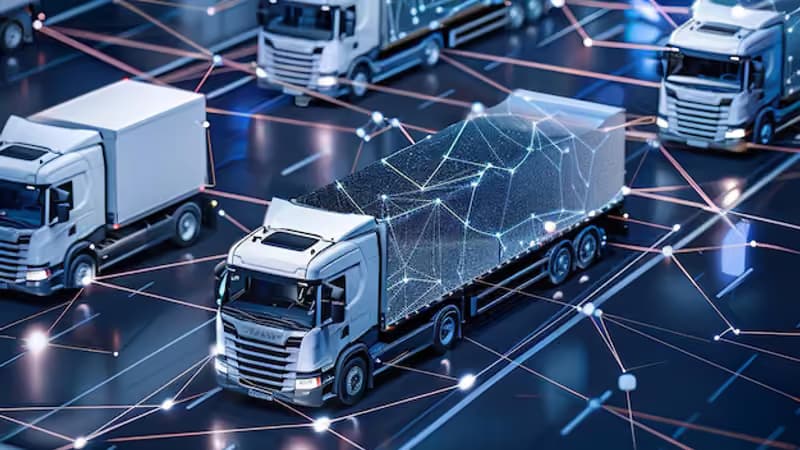
Looking forward, the next logical step for Chinese automakers is to integrate robotics with their autonomous vehicle platforms. Imagine a fleet of driverless cars that can deploy humanoid assistants for passenger comfort, or a logistics network where self‑driving trucks hand off packages to stationary robots for last‑mile delivery.
For India, the lesson is clear: invest early in robotics education, foster local talent in AI and robotics, and build standards that balance innovation with safety. The Chinese auto‑robot revolution is not just a market trend—it is a tectonic shift that will reshape how we live, work, and interact with machines.
A New Era of Human‑Centric Machines
The convergence of automotive engineering, AI, and robotics is ushering in a new era where machines can not only move autonomously but also understand and assist humans in everyday tasks. Chinese automakers, armed with years of experience in mass production and electrification, are poised to lead this transformation. For India, the on‑ramp is now: adapt, collaborate, and innovate to remain a vital player in the global robotics ecosystem.