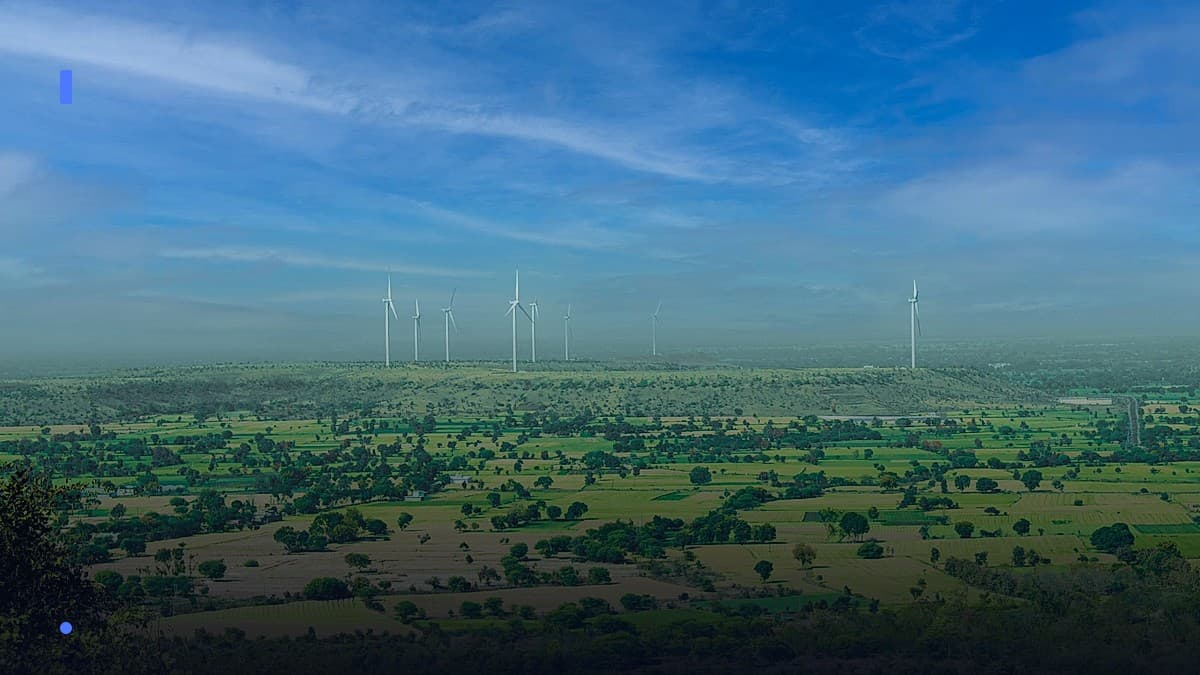
The sound of a turbine turning on a wind‑farm in Gujarat has never been louder, nor has the hum of a data centre monitoring a solar‑panel array in Rajasthan been more urgent. In the past month, a cascade of fresh capital has poured into India’s clean‑energy ecosystem, a wave that is already redrawing the map of the nation’s power grid. The surge is not just a financial footnote; it is a structural inflection point that forces every cleantech entrepreneur to rethink product road‑maps, partnership strategies, and the very definition of “energy startup.”
For a country that still imports a sizable share of its fossil fuel needs, the stakes are existential. The government’s ambition to decarbonise 60 percent of electricity by the end of the decade now sits on a foundation of venture dollars, sovereign‑wealth pledges, and strategic corporate bets that arrived in August. Those funds have already been earmarked for a mix of grid‑scale solar, offshore wind pilots, next‑generation battery factories, and the digital platforms that will stitch them together. The question for founders is no longer “if” the grid will change, but “how fast” and “where” their niche fits into the emerging architecture.
A Capital Tsunami: Who is Funding the Grid’s New Backbone?
The August funding round was characterised by an unprecedented confluence of investors. Domestic sovereign funds such as the India Infrastructure Fund and the National Investment and Infrastructure Fund each committed multi‑billion‑rupee tranches to a consortium of renewable‑generation projects, signalling a clear policy‑backed confidence in large‑scale solar and wind. International climate‑focused funds—namely the Climate Investment Funds (CIF) and the European Investment Bank—matched that enthusiasm with equity stakes in offshore wind demonstrators off the coast of Tamil Nadu.
On the corporate side, the traditional energy giants are reinventing themselves as venture‑backed platforms. Adani Green, already a heavyweight in utility‑scale solar, launched a $300 million growth fund that is targeting hybrid solar‑wind farms equipped with AI‑driven forecasting tools. Similarly, Tata Power’s new “CleanTech Accelerator” has opened its first cohort to startups that can deliver real‑time grid balancing services, a clear nod to the need for digital elasticity as renewables swell.
Venture capitalists, traditionally wary of the long‑haul nature of infrastructure, have also entered the fray. Sequoia Capital India announced a $150 million “Energy Transition” fund, explicitly designed to back early‑stage companies that can plug the “last‑mile” gap between generation and consumption. Notably, the fund’s first check went to GridSense, a Bangalore‑based platform that aggregates micro‑solar data from rooftops and feeds it into regional dispatch algorithms.
The net effect is a multi‑layered financing ecosystem that simultaneously fuels megaprojects and the granular tech stack required to operate them. This duality is reshaping the competitive landscape: scale‑players can now afford to experiment with digital twins of their assets, while nimble startups gain access to capital previously reserved for the likes of state‑run power utilities.
The Grid’s New Architecture: From Monolithic to Modular
Historically, India’s grid has been a monolithic, centrally‑managed system, with large thermal plants dictating dispatch schedules. The influx of renewable capacity—now crossing the 100‑gigawatt threshold—has forced a paradigm shift toward modularity and decentralisation. Grid operators such as POSOCO are piloting “flexible zones” where renewable output is directly coupled with localized storage and demand‑response assets.
A concrete illustration lies in the newly commissioned 2‑gigawatt solar park in Madhya Pradesh, which is co‑located with a 500‑megawatt lithium‑iron‑phosphate battery plant operated by Amara Raja Batteries. The battery facility, financed in part by the August capital wave, is not a mere backup; it actively participates in frequency regulation, shaving off 0.5 percent of ancillary costs for the region. This co‑location model is rapidly being replicated in Karnataka, where a 1‑gigawatt wind farm is paired with a pumped‑hydro storage unit owned by NHPC.
Digital platforms are the nervous system of this modular grid. Companies such as Voltaware and PowerLedger are deploying blockchain‑based energy accounting that enables peer‑to‑peer trading between industrial consumers and rooftop solar owners. Their solutions are being trialled in Delhi’s “Smart City” zones, where real‑time price signals are already influencing load‑shifting decisions for large data centres.
The modular approach also opens doors for micro‑grids in remote areas. In the northeastern state of Arunachal Pradesh, a consortium led by Oorjan Cleantech has installed a hybrid solar‑biomass micro‑grid that feeds excess power into the main transmission line during monsoon‑season shortages. The model demonstrates how capital can be deployed not only for megaprojects but also for localized resilience, a balance that policymakers are now explicitly encouraging.
Startup Playbooks: Where the Real Value Lies
For the next generation of cleantech founders, the August funding surge translates into three strategic imperatives: integration, intelligence, and infrastructure‑as‑a‑service.
First, integration. The grid’s modular future demands hardware and software that can speak the same protocol. Startups that provide interoperable communication stacks—think Kavach Technologies, which offers a unified API for solar inverters, battery management systems, and demand‑response controllers—are becoming the glue that holds disparate assets together. Their recent Series A round, led by a consortium of sovereign investors, underscores the appetite for plug‑and‑play solutions that reduce commissioning time for hybrid projects.
Second, intelligence. With renewable intermittency comes the need for predictive analytics. Companies like SunCulture AI are leveraging satellite imagery and weather‑model ensembles to forecast solar output at a 5‑kilometre granularity, feeding those predictions into POSOCO’s dispatch engine. Their platform, now integrated into three state‑run utilities, demonstrates how data‑centric startups can monetize accuracy improvements measured in reduced curtailment percentages.
Third, infrastructure‑as‑a‑service (IaaS). The traditional cap‑ex model of building a battery farm is being upended by firms offering “pay‑per‑use” storage. Energio, a Mumbai‑based startup, rents out modular battery pods that can be stacked on existing substations, with contracts as short as six months. This model lowers the barrier for distribution utilities to experiment with storage without committing to long‑term debt, a flexibility that the August capital influx has made financially viable.
Startups that ignore these three vectors risk being sidelined. The market is coalescing around a “layered value chain” where the most lucrative opportunities sit not in the raw generation of power but in the orchestration of that power across time and space. Founders who can embed themselves in the orchestration layer will capture the lion’s share of the new revenue streams.
Competitive Ripples: Winners, Losers, and the Global Play
The capital surge is reshaping competitive dynamics both domestically and internationally. On the winning side are the hybrid developers—companies that can bundle solar, wind, and storage under a single EPC contract. ReNew Power, leveraging its new equity infusion, has already announced a pipeline of 5‑gigawatt hybrid projects that promise lower levelised cost of electricity (LCOE) than standalone assets. Their ability to secure long‑term offtake agreements with Indian Railways and major steel producers gives them a distinct advantage in a market hungry for reliable clean power.
Conversely, pure‑play solar developers that lack storage or digital capabilities are feeling pressure. Several midsized EPC firms that focused exclusively on utility‑scale solar have reported a slowdown in contract wins, as buyers now request integrated solutions. Some are scrambling to acquire niche tech firms to stay relevant—a trend that mirrors the consolidation seen in the global renewable sector over the past decade.
Internationally, India’s accelerated financing is attracting foreign incumbents eager to tap the country’s vast market. Ørsted has announced a joint venture with ACME Solar to build an offshore wind farm off the coast of Gujarat, a project that will be partially funded by the European Investment Bank’s new green bond issuance. While foreign expertise brings advanced turbine technology, it also raises questions about domestic supply‑chain development.
The net effect is a competitive landscape that favours “full‑stack” players—those that can deliver generation, storage, and digital services under one roof. Startups that specialise in a single niche must either align with a full‑stack partner or expand their offering through strategic M&A. The surge in capital makes both paths financially feasible, but the strategic choice will dictate long‑term survivability.
Policy, Regulation, and the Road Ahead: Aligning Capital with Climate
The funding influx would be far less potent without a supportive policy backdrop. In the wake of the August announcements, the Ministry of Power has released a draft amendment to the Electricity Act that explicitly recognises “aggregated distributed resources” as eligible participants in ancillary service markets. This regulatory shift will unlock revenue streams for the micro‑grid and storage startups that have so far operated on a cost‑recovery basis.
Furthermore, the Central Electricity Regulatory Commission (CERC) is piloting a “green capacity market” that awards a premium to projects that demonstrate a minimum of 30 percent hybridisation—solar plus wind plus storage. Early adopters such as Azure Power are already re‑engineering their project pipelines to meet this criterion, anticipating that the premium could shave 0.8 percent off their overall cost of capital.
On the financing side, the Reserve Bank of India has introduced a “green priority sector lending” (PSL) target that nudges banks to allocate a higher proportion of their loan books to renewable and storage projects. This move dovetails with the private capital surge, creating a layered financing structure that can support both cap‑ex heavy projects and the lighter, software‑driven ventures that enable grid flexibility.
Looking forward, the convergence of policy, capital, and technology suggests a virtuous cycle: as more hybrid projects come online, grid operators will demand increasingly sophisticated digital tools, which in turn will attract further venture money into AI, IoT, and blockchain solutions. The next inflection point may arrive not from a new funding round but from a regulatory trigger—perhaps a mandatory grid‑scale storage quota for all new renewable contracts. Startups that have positioned themselves at the intersection of hardware and software will be the first to reap the benefits of such a mandate.
The cleantech surge of August 2026 is more than a headline; it is a structural re‑architecting of India’s power system. For founders, the imperative is clear: embed your technology in the modular grid, deliver intelligence that the system can trust, and package your solution as a service that de‑risk’s capital for larger players. Those who master this triad will not only ride the wave of capital but will become the architects of India’s low‑carbon future.