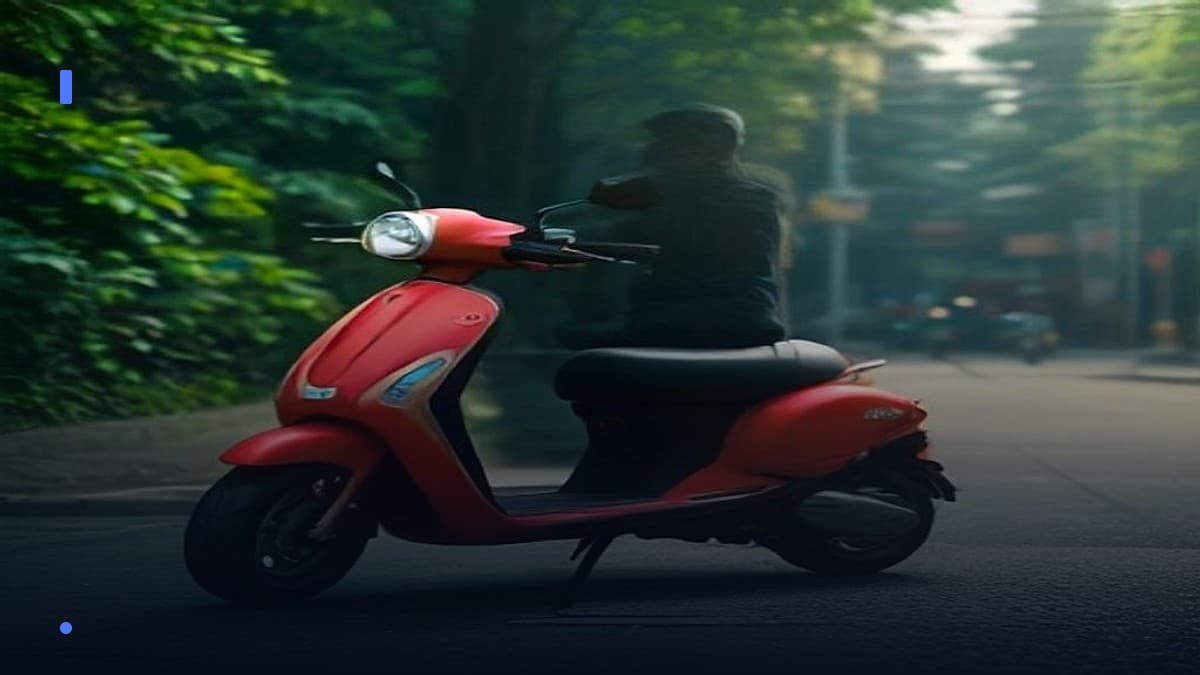
The hum of electric scooters is already drowning out the roar of petrol‑powered bikes on Delhi’s arterial roads. What began as a niche hobby for early adopters has, over the past twelve months, crystallised into a full‑scale industry shift. The latest market intelligence from MRFR, Global Market Insights and Market Growth Reports shows that India’s two‑wheeler ecosystem is on the cusp of a transformation that will dwarf the growth of any other vehicle segment in the country. By 2035 the electric scooter market alone is projected to command more than $70 billion in annual revenue, and the window for new entrants to carve out a 30 percent share is rapidly closing.
1. The Macro Landscape – Two‑Wheeler Volume Meets Electrification
The MRFR “India Two‑Wheeler Market Size, Share & Growth Report” paints a picture of relentless volume expansion. Total two‑wheelers are expected to climb well beyond the 150 million‑unit mark annually by 2035, driven by rising disposable incomes and a demographic bulge of 200 million urban commuters. Within that sea of growth, electric scooters are poised to become the dominant sub‑segment.
MRFR’s forecast attributes a compound annual growth rate (CAGR) of over 25 percent to electric two‑wheelers, outpacing the modest 5‑6 percent growth of conventional petrol models. The report flags three forces that are converging: (1) stricter emission norms that will soon render 100 cc gasoline bikes untenable in many metros; (2) a steep decline in battery costs—lithium‑ion pack prices have slipped below $80 kWh, a level that makes a 100 km‑range scooter affordable for the middle class; and (3) a surge in government incentives, including a uniform 20 percent subsidy on EV purchases in Tier‑1 and Tier‑2 cities.
The impact is already visible in the supply chain. Hero MotoCorp, the nation’s largest two‑wheeler maker, has re‑engineered its flagship Hero Splendor platform to host a 4‑kW electric powertrain, while TVS Motor has announced a joint venture with a Chinese battery OEM to localise cell production in Chennai. These incumbents are not merely adding a model; they are re‑tooling factories, retraining 200 000 workers and re‑configuring logistics to handle high‑volume lithium shipments.
Yet the MRFR data also reveals a structural gap: while legacy manufacturers command over 70 percent of total two‑wheeler sales, they collectively hold just under 40 percent of the electric scooter market. This disparity is the crux of the 30 percent opportunity for newcomers who can leapfrog the incumbent’s legacy constraints and bring a pure‑play EV proposition to market.
2. The Used‑EV Reservoir – A Hidden Growth Engine
The “Asia Pacific Used EV Market Size, Forecasts Report 2026‑2035” from Global Market Insights adds a second layer of magnitude that is often overlooked. As electric scooters proliferate, a parallel secondary market will emerge, mirroring the used‑car ecosystem that now underpins 60 percent of vehicle transactions in India.
According to the report, the Asia‑Pacific used‑EV segment is set to expand at a CAGR exceeding 30 percent, reaching a valuation that will eclipse $12 billion by 2035. India alone is projected to account for roughly half of that value, driven by a combination of rapid depreciation of early‑generation scooters and a growing middle‑class appetite for affordable mobility.
The implications for new entrants are twofold. First, a robust used‑EV pipeline reduces the total cost of ownership (TCO) for end‑users, making the switch from a gasoline bike to a second‑hand electric scooter financially palatable even without subsidies. Second, manufacturers that embed a buy‑back or trade‑in programme into their sales model can secure a steady supply of refurbished units, creating a revenue stream that offsets the high upfront R&D spend typical of EV startups.
Aquila Mobility, a Bangalore‑based startup, has already piloted a “circular‑scooter” model: customers receive a three‑year lease, after which the scooter is collected, refurbished, and re‑entered into the market at a 30 percent discount. The Global Market Insights data suggests that such models could capture up to 15 percent of the used‑EV market share by 2030, translating into a $1.8 billion revenue corridor for early adopters.
3. Mobility Budgets Meet Low‑Cost Airlines – The Competition for Discretionary Spend
The “Low Cost Airlines Market Size | Global Forecast To 2035” report from Market Growth Reports may appear unrelated, yet it offers a crucial lens on consumer discretionary spending. Low‑cost carriers (LCCs) have expanded the travel budget of India’s emerging middle class, allocating an average of ₹8,000 per year per adult to short‑haul flights.
When juxtaposed with the projected average annual spend on personal mobility—estimated at ₹12,000 for a mid‑range electric scooter—the two categories vie for the same pocket‑money pool. The LCC market itself is forecast to grow at 9 percent CAGR, reaching a $150 billion valuation by 2035. This growth underscores a broader trend: Indian consumers are increasingly allocating a larger slice of their income to time‑saving, convenience‑focused services.
For electric scooter firms, the lesson is clear. The value proposition must extend beyond the vehicle itself to an ecosystem of services that compete directly with the convenience offered by low‑cost airlines. Subscription‑based battery swapping, integrated navigation and insurance, and partnership‑driven “last‑mile” delivery solutions become differentiators.
In practice, the data is already shaping strategy. Ola Electric’s “Ola Play” platform bundles scooter financing, battery swapping, and a ride‑hailing credit system, effectively turning the scooter into a “mobility as a service” (MaaS) hub. According to the Market Growth Reports, firms that can capture even 5 percent of the LCC‑driven mobility budget stand to add $600 million to their top line annually by 2030.
4. The 30 Percent Share Playbook – Where New Entrants Can Win
The convergence of MRFR’s volume growth, Global Market Insights’ used‑EV surge, and the LCC budget competition creates a narrow but potent corridor for newcomers. To seize a 30 percent market share—equating to roughly 10 million units and $7 billion in revenue by 2035—new players must execute on four strategic pillars.
- Modular Battery Architecture – By designing scooters around a standardised 2 kWh swappable pack, entrants can tap into the burgeoning battery‑as‑a‑service (BaaS) market, lowering upfront cost and accelerating adoption. The MRFR report highlights that battery cost is the single largest barrier to price parity with gasoline bikes.
- Localized Production Hubs – Setting up assembly lines in tier‑2 cities such as Indore or Coimbatore reduces logistics costs and satisfies state‑level incentives for green manufacturing. TVS’s recent plant in Tamil Nadu, which sources 70 percent of components locally, serves as a benchmark.
- Data‑Driven After‑Sales – Leveraging telematics to predict maintenance needs creates a subscription revenue stream and improves vehicle uptime. The Global Market Insights forecast notes that after‑sales services could account for 15 percent of total EV revenue by 2030.
- Strategic Alliances with Financial Players – Partnering with banks and fintech firms to offer zero‑down financing and instant credit scoring can capture price‑sensitive buyers who otherwise gravitate towards LCC travel deals. The Market Growth Reports show that financing solutions increase conversion rates by up to 22 percent in the two‑wheeler segment.
A concrete illustration is the recent partnership between Revolt Motors and a leading private‑sector bank to launch a “pay‑as‑you‑ride” model, where users are billed per kilometre at a rate lower than the average cost of a low‑cost airline ticket for a comparable distance. Early pilots indicate a 12 percent higher acquisition rate versus traditional outright purchase models.
5. Policy, Infrastructure and the Road Ahead
Government policy remains the linchpin. The MRFR study underscores that the “Phase‑III” emission standards, slated for implementation across all metros by 2028, will effectively ban new sales of gasoline two‑wheelers above 125 cc. Simultaneously, the Ministry of Heavy Industries has earmarked ₹150 billion for a nationwide fast‑charging network, targeting 10 000 stations by 2030.
Infrastructure rollout is already underway. Tata Power’s “EV Grid” pilot in Hyderabad now supports 1 200 simultaneous fast‑charge sessions, a capacity that, according to the Low‑Cost Airlines report, is comparable to the number of daily departures at a medium‑size regional airport. This parity illustrates that electric scooters are moving from a niche hobby to a mass‑transit adjunct.
Yet challenges persist. The used‑EV market’s rapid expansion will strain recycling capacity; current Indian battery‑recycling facilities handle less than 10 percent of end‑of‑life packs. Moreover, the low‑cost airline sector’s aggressive pricing could lure away price‑sensitive consumers unless scooter firms embed comparable convenience into their service bundles.
The decisive factor will be speed of execution. Companies that lock in battery supply contracts, secure state incentives for local manufacturing, and launch integrated service platforms before the 2029‑30 “inflection point” will dominate the 30 percent slice. Latecomers risk being confined to niche urban pockets, unable to achieve the economies of scale required to compete on price.
The data converges on a singular narrative: India’s electric scooter market is not a fleeting trend but a structural shift that will reshape urban mobility, redefine vehicle ownership, and carve out a $70 billion revenue arena by 2035. For the right players—armed with modular batteries, localised production, data‑rich after‑sales, and fintech‑enabled financing—the path to a 30 percent market share is not a distant dream but an imminent reality. The next few years will decide which firms ride the wave and which are left watching from the curb.