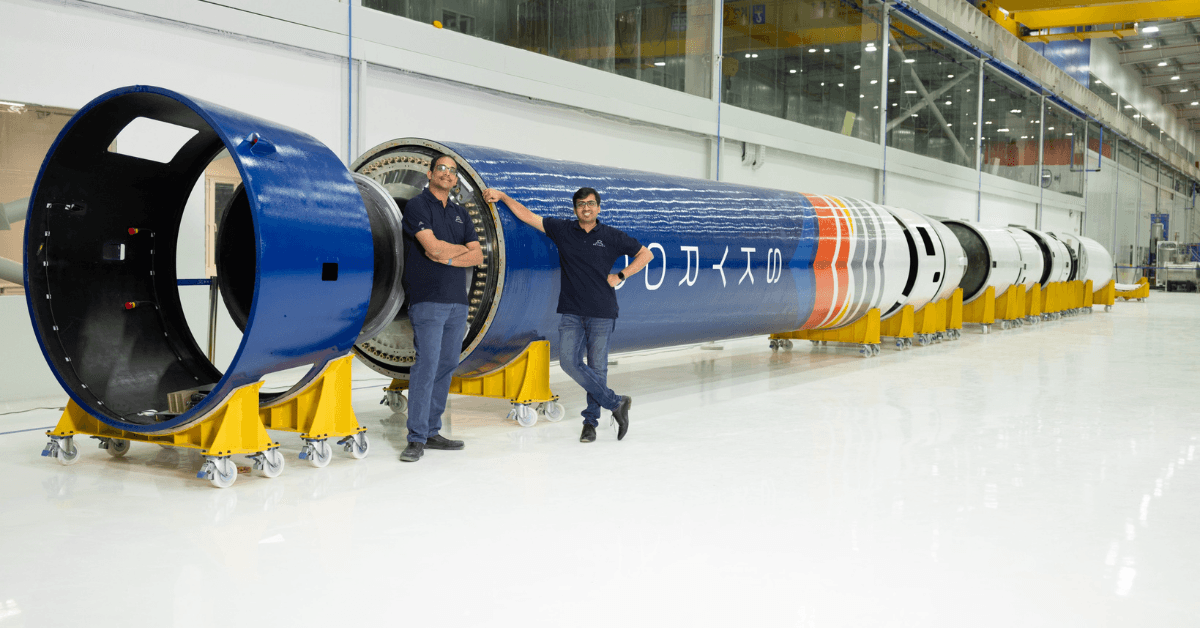
The success of Skyroot's Vikram-1 launch vehicle in placing payloads into orbit has marked a significant milestone for India's burgeoning space industry. Among the payloads on board was a technology demonstration by Cosmoserve, a spacetech startup developing a soft robotic capture system for active debris removal. Although the system's robotic petals failed to deploy as intended, the mission generated valuable in-orbit test data that will be crucial in refining the technology.
The growing problem of space debris has become a pressing concern for the global space industry. With thousands of defunct satellites and other pieces of debris orbiting the Earth, the risk of collisions with operational spacecraft is increasing by the day. India, with its rapidly expanding space program, is not immune to this problem. In fact, the country's space agency, ISRO, has been actively working on developing technologies to mitigate the effects of space debris. The development of a soft robotic capture system by Cosmoserve is a significant step in this direction.
So, what makes soft robotics so promising for active debris removal? Unlike conventional rigid capture mechanisms, soft robotic systems are designed to gently envelop and secure irregular or tumbling objects, making them easier to capture for removal or in-orbit servicing. This is particularly important when dealing with objects that are difficult to grasp or manipulate using traditional rigid systems. By using flexible robotic petals, Cosmoserve's system can capture a wide range of objects, from small satellites to larger pieces of debris.
The failure of the robotic petals to deploy as intended during the Mission Embrace test flight may seem like a setback, but it is a common occurrence in the development of new technologies. In fact, the data generated during the mission will be invaluable in refining the system and identifying areas for improvement. As Cosmoserve's founder and CEO, Chiranjeevi Phanindra, noted, the test flight generated significant data to validate the system, insights that could not have been obtained through ground-based testing.
The cost-effectiveness of the Mission Embrace test flight is also worth noting. By launching a technology demonstration payload aboard Vikram-1, Cosmoserve was able to obtain the required test data at a fraction of the cost of building an entire satellite. This approach not only saves money but also reduces the risk of failure, allowing startups like Cosmoserve to iterate and refine their technologies more quickly.
The success of Skyroot's Vikram-1 launch vehicle is also a significant milestone for India's space industry. As the first privately developed Indian rocket to successfully place payloads into orbit, Vikram-1 has paved the way for other startups to launch their own payloads and experiments into space. This is likely to lead to a surge in innovation and entrepreneurship in the space sector, with startups like Cosmoserve and Skyroot at the forefront of this movement.
As India's space industry continues to grow and mature, it is likely that we will see more startups like Cosmoserve developing innovative solutions to the problem of space debris. The government has already taken steps to encourage the development of space technology, including the establishment of the Indian Space Promotion and Authorisation Centre (IN–SPACe). However, more needs to be done to support startups like Cosmoserve and provide them with the resources and funding they need to develop their technologies.
In conclusion, the development of a soft robotic capture system by Cosmoserve is an important step in addressing the growing problem of space debris. Although the Mission Embrace test flight was not entirely successful, it generated valuable data that will be used to refine the technology and support the development of future debris-removal spacecraft. As India's space industry continues to grow and mature, it is likely that we will see more innovative solutions to this problem, and startups like Cosmoserve will be at the forefront of this movement.